45-Day Literacy Revolution: The Dramatic Impact of an
Unconventional Pedagogy
This write-up investigates ALfA (Accelerated Learning for All), a
groundbreaking literacy education method, contrasts it with
traditional techniques, and emphasizes its capacity to enhance
literacy results swiftly and efficiently
Improving literacy rates is a critical step in reducing
poverty and promoting economic growth. One extra year of
schooling can increase an individual’s earning power by 10%
on average.
– The Organisation for Economic Cooperation and Development
(OECD; 2019)
“Literacy is a key factor in achieving economic and social
development, as it is associated with higher earnings and
better employment opportunities. Literacy also has a
positive impact on health and social participation, as well
as on women’s empowerment and gender equality.”
– UNESCO
Return on investment in literacy, especially on literacy of
women are the highest of any other development goal. They
have also an intergenerational impact. When children learn
to read, they are more able to continue with their
education. This impacts their entire lives. It is quick and
easy to teach with new groundbreaking methods.
If children can’t read now, they’re risking a future trapped in
lifelong poverty. Literacy education plays a vital role in
empowering individuals. While the pedagogy used to teach reading
is crucial for quick improvements in literacy in India and
globally, most literacy programs neglect to evaluate it.
Prevailing reading programs often follow traditional approaches,
such as the whole language, phonics, or balanced phonics that
take three years or more to make a child literate
Understanding Traditional Approaches to Reading Development
Whole Language Approach: The whole language
approach focuses on the meaning of the text and emphasizes
reading for comprehension rather than decoding individual words.
We all most likely learned to read this way. In India, and
worldwide, this is the pre-dominant way children learn to read.
Phonics Approach: The phonics approach
emphasizes the relationship between letters and sounds, helping
children decode and read words accurately. In a phonics-based
reading program, students learn letter-sound correspondences.
Teachers may use phonics games, flashcards, and word-building
activities to reinforce the understanding of letter-sound
relationships. Students practice blending sounds to read words
and sentences.
Balanced Phonics Approach: The balanced phonics
approach combines elements of both whole language and phonics,
integrating sight words, context, and phonetic principles.
There are proponents and critics of both of these traditional
methods that often result in prolonged learning periods, with
children taking several years to develop reading proficiency. In
many cases, students struggle with basic reading skills even
after three to five years of instruction, leading to low reading
comprehension and meaning making abilities
The Reading Wars Debate: The “reading wars”
debate refers to the ongoing discussion and disagreement among
educators and researchers regarding the most effective approach
to teaching reading. Proponents of the whole language approach
argue for the importance of meaning-making and context, while
proponents of phonics advocate for explicit instruction in
letter-sound correspondences. The debate has shaped the
landscape of literacy education for decades.
A fresh methodology is demonstrating remarkable speed and
effectiveness. This approach empowers both children and adults
to attain reading proficiency in just 45 instructional days. The
roots of this program lie in eight years of diligent research
conducted in the slums and villages of Lucknow. Launched in
2022, the program is currently operational in two dozen
districts across India. Its success has led to its adoption by a
whole nation, the Maldives, with 12 more countries poised to
implement it. This does beg the question - how can foundational
literacy be acquired in just 45 instructional days? Seeing is
believing. There is growing evidence of the same including from
Harvard Graduate School of Education.
ALfA—A New Disruptive Approach
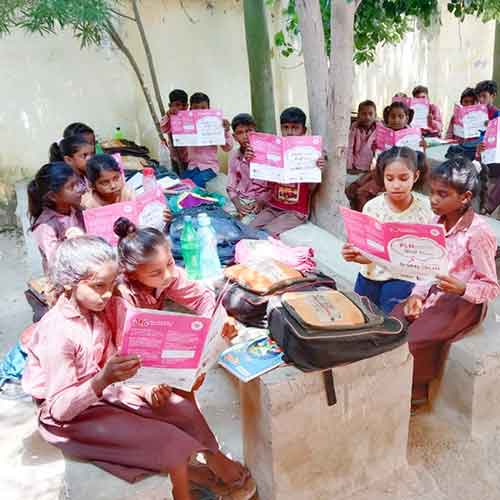
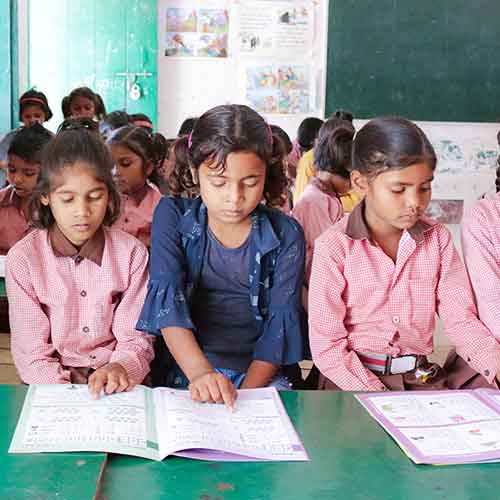
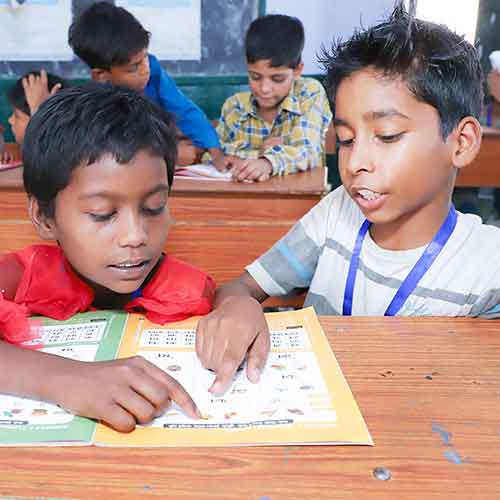
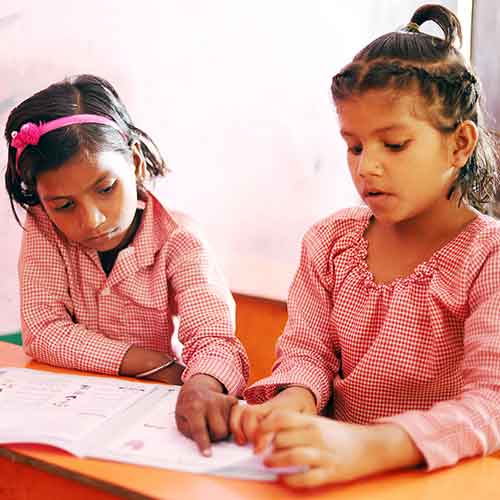
ALfA, Accelerating Learning for All, is an engaging
and effective process of learning in pairs. It is
child-led and child-centric. Teacher is a galvanizer
who provides triggers for children’s learning. These
are provided in the ALfA Toolkits which consist of
very thin booklets, acting as triggers for children’s
expanded learning.
The ALfA Method: Accelerating Learning for All
Children take turns to decode first sounds from
‘known’ pictures from their environment, then blend
two or more sounds to make words on their own from the
beginning. They do not need to learn letters first
(this alone saves 1 to 2 years). Children create and
co-create questions for each other and take
responsibility for their peers’ learning. Peers are
allocated randomly and changed frequently so that all
children learn to work with the entire class.
The process is interactive, engaging, and joyful.
Learning is accelerated as the transaction utilizes
the time well, instead of dead spaces created in
traditional teaching by children waiting for the next
instruction from the teacher. After a demonstration by
the teacher in pair with one student, and another
demonstration by two children in the front, all pairs
in the class know exactly what their task is
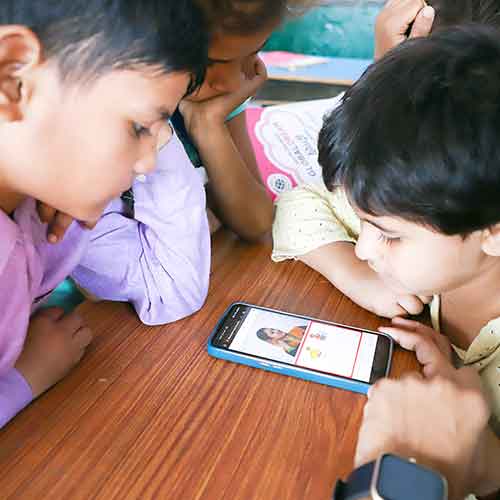
Children learn from apps as and when available. No
printed materials are needed where there is a digital
screen or projector. With 10x less paper, 10x faster
method, and no printed material where possible, ALfA
is also an education for climate change.
The Pedagogy of the Future
Children as young as 6 are able to take turns to read.
They are able to learn in pairs and enjoy doing so.
Learning is way more permanent.
Contrasting ALfA with Traditional Approaches:
ALfA presents a distinct departure from traditional methods. It
eliminates rote learning and the strict alphabetical order of
letters found in whole language and phonics approaches. It also
avoids overemphasis on letter-sound associations that define
phonics instruction. By departing from these traditional
approaches, ALfA opens new possibilities for accelerating learning
of reading.
Early Decoding and Blending: In the ALfA method, early decoding
and blending of sounds is prioritized. However, these sounds are
not derived from individual letters, but rather from familiar
words, accompanied by illustrative pictures.
ALfA flips the conventional teaching approach, starting not with
unknown letters or sounds but with familiar visual cues from a
child’s environment. For example, a child familiar with the
English language will recognize a picture of a car and can decode
the first sound “ka or /c/” in “car.” This approach facilitates
rapid progress in decoding and blending sounds to form words.
Children can go from “car” /c/, “apple” /a/, “top” /t/ to make the
word “cat” on their own on the very first day. This kind of
learning sticks and is rarely forgotten. In ten days, they not
only master the letters but also read over 500 words. This is not
only possible, it is taking place in schools implementing ALfA
across geographies.
Known Pictures as a Starting Point: ALfA starts
with known pictures from the environment of the child. Children
connect known pictures, not abstract letters, to their
corresponding first sounds.
Using Cognitive Abilities: ALfA uses children’s
cognitive abilities to derive first sounds from known pictures and
blend them to form words on their own. This selfdirected learning
approach fosters autonomy and allows children to take ownership of
their learning.
Paired Learning and Error Control: ALfA employs a
paired learning model which helps in error detection and
correction, improving learning retention and comprehension. Paired
learning also enhances students’ communication and critical
thinking skills.
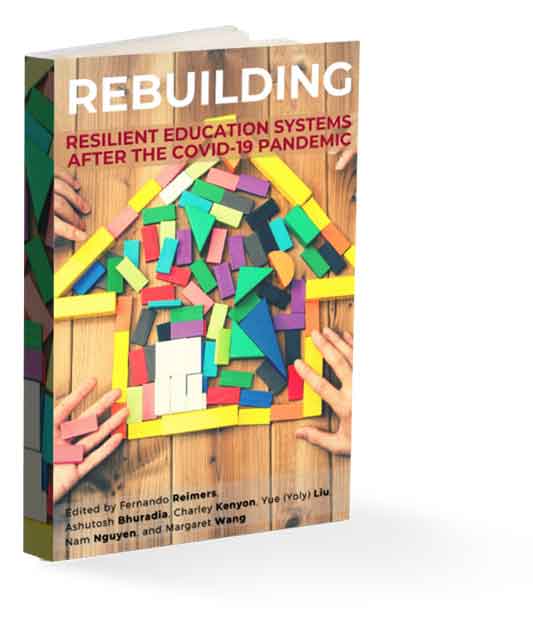
EVIDENCE FOR ALfA: Accelerating Learning for All
Rebuilding Resilient Education Systems After the COVID-19
Pandemic
Harvard Graduate School of Education, USA
“Accelerated Learning for All (ALfA), helps children quickly
gain FLN competencies. The pedagogical approach works as
follows: students start with known words in the form of
pictures, identify the sounds, and work backward to the
letters.” “The effect size of the project was 0.23 for Grade
3 students and 0.89 for Grade 5… the results suggest there
is significant value in pursuing the ALFA model in other
schools if implemented in a coherent, structured, and
coordinated manner.” “We recommend the UP government (1)
incorporate the promising ALfA pedagogy developed by DEVI
for the first 6 weeks to quickly establish a strong FLN
foundation, (2) after the ALfA program, shift to the
curriculum.
Traditional Writing Approaches versus ALfA Writing Approaches
Traditional Writing Approaches: Traditional
writing approaches often follow a step-by-step progression,
starting with letter formation and handwriting practice. Students
learn to write by copying and tracing letters and words, gradually
progressing to forming simple sentences and paragraphs.
Incorporating Language Skills:
ALfA also emphasizes legible handwriting and correct letter
formation but integrates writing with the development of language
skills. Students are encouraged to use their growing vocabulary
and comprehension abilities to construct meaningful written texts
from the beginning. Students are provided with opportunities to
express their thoughts, ideas, and experiences through writing,
promoting both language development and creative expression.
Collaborative Writing: ALfA emphasizes
collaborative writing activities where students work together in
pairs to generate ideas, provide feedback, and revise their
written work. This collaborative approach promotes peer
interaction, critical thinking, and the development of writing
skills through shared experiences. It fosters communication and
expression leading to a holistic approach to writing.
Quotes above are from Chapter 8: Policy Pathways for Improving
Foundational Literacy and Numeracy in Uttar Pradesh, India
Chapters 8 documents the ALfA program and its results from a
Randomized Control Trial conducted in the Shamli district of Uttar
Pradesh, that demonstrate a significant effect size of 0.23 for
Grade 3 and 0.89 for Grade 5. In 2022, DEVI Sansthan, at
invitation of the Secretary, MOE, India, started implementing ALfA
in the Low Performing Districts (LPDs) of Shamli in Uttar Pradesh
and Sambalpur in Odisha. The project’s success led to its
expansion from one district to 15 districts of UP, and adoption by
Maldives at the nationwide level, as discussed in Chapter 10 of
this book. Several other governments have expressed interest in
the program.
Conclusion
Traditional approaches to teaching reading, such as whole language, phonics, and balanced phonics, have shaped
literacy education over the years. However, the ALfA approach stands out as a unique and promising alternative. By
focusing on early decoding, blending, independent learning, collaborative error control, and time efficiency, ALfA
accelerates reading proficiency and transforms the way children acquire literacy skills. As educational research and
implementation continue to explore the effectiveness of ALfA, it has the potential to redefine the future of literacy
education worldwide.