
Chance Encounter Can Change Lives
The journey towards universal literacy is not an easy one, but with innovative methods like ALfA and the collective efforts of passionate individuals and organizations, we can turn the tide and empower countless lives through the transformative power of literacy - By Joanne Telser-Frere
In the summer of 2021, Milita Halder, a member of Dr. Sunita Gandhi’s Global Dream team, contacted me, and I had the opportunity to connect with individuals from across the globe who share the same passion as me - transforming lives through literacy. This single action has already indirectly impacted the lives of a group of adults in Chicago, and we hope it can inspire positive change for hundreds of thousands more
As the Director of Program Development at Literacy Chicago, the city’s oldest non-profit organization specializing in adult education, I was approached by Milita, who was searching for people to discuss literacy-related issues on their new YouTube channel called “D-Talks.” This initiative is part of Global Dream, a Disruptive Movement for Universal Foundational Literacy and Numeracy, spearheaded by Dr. Sunita Gandhi.
During that time, I had the privilege of meeting Dr. Sunita Gandhi and immediately became intrigued by her program aimed at eradicating illiteracy worldwide. She proposed a revolutionary method to teach reading to both children and adults.
Traditionally, there have been two widely debated approaches to teaching reading. The first is the “Whole Language” method, where words are simply memorized as whole units. The second approach involves teaching “Phonics”, which focuses on the relationship between letters or groups of letters and the sounds they represent.
One of the challenges, as explained by Dr. Gandhi, is that these methods often start from the unknown and progress towards the known. The sight word method involves memorizing the visual appearance of a word without understanding its meaning, while the phonics method uses unfamiliar symbols (letters) to connect to sounds but initially which are also unknown as in “b” says /b/.
Dr. Gandhi recognized the need to create an alternative approach to reading instruction that starts with what learners already know, connecting it to sounds, and then introducing the corresponding symbols (letters).
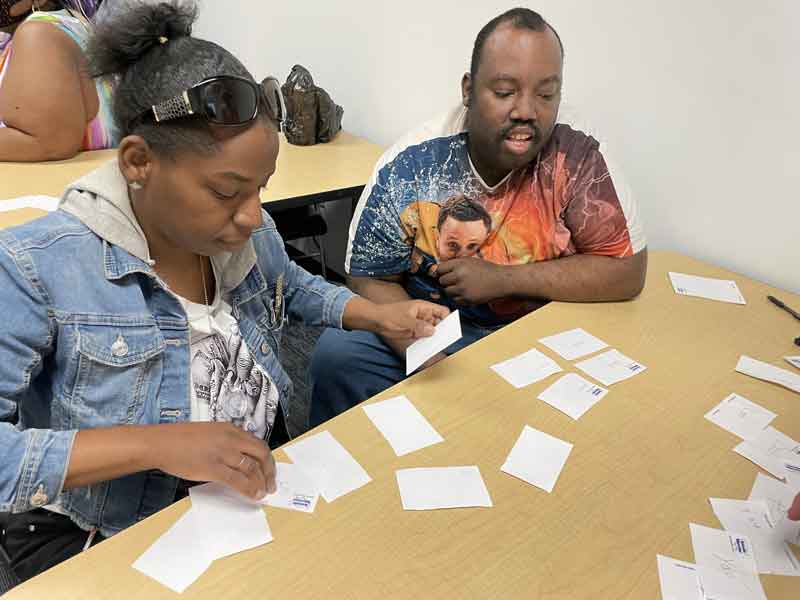
In the ALfA method for literacy (Accelerating Learning for All), learners begin by looking at a picture of a common object and are asked to identify the FIRST sound of the word. They are then shown the letter that represents that sound. No emphasis is placed on the name of the letter or its place in the alphabet. The goal is to connect a known picture to first sounds of these pictures, and add the known sounds to make words from the beginning. The letter is shown as a sound symbol. The ALfA method consists of two concise books, enabling learners to grasp the method within just 45 days. The first book teaches the sounds of consonants and vowels, while the second book introduces digraphs and delves into more complex reading, including short stories and poetry. Astonishingly, Dr. Gandhi explained that learners can read a newspaper within two months of utilizing this method. This revelation astonished me, given that I have witnessed the struggles faced by our adult learners, whose progress is often slow.
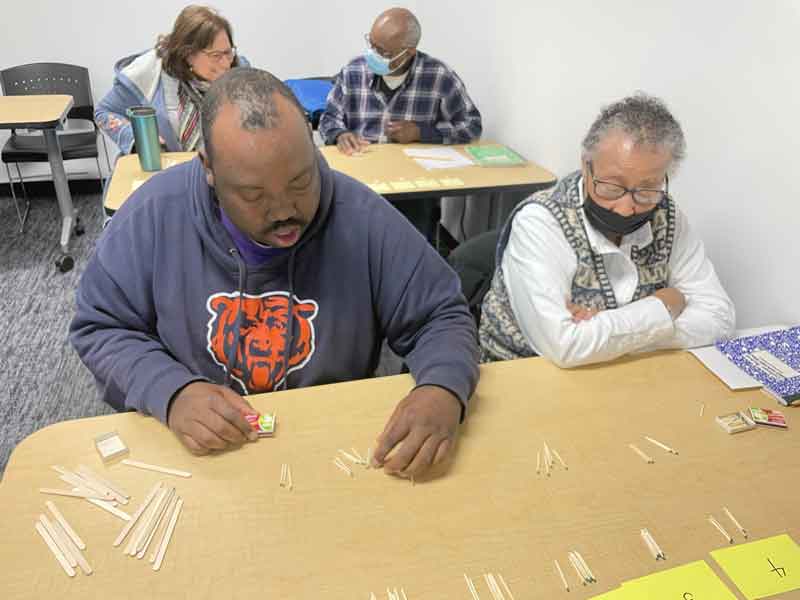
Low levels of literacy are often accompanied by low levels of numeracy. ALfA also incorporates a kinesthetic approach to teach numeracy, using popsicle sticks, matchsticks, or beans to facilitate counting. Within the same 45-day period, learners can master foundational math skills, such as addition, subtraction, multiplication, and division. This approach offers an engaging learning experience, focusing on active participation rather than mere memorization.
Several aspects of ALfA immediately appealed to me. First and foremost, it is an affordable program that can be accessed online, making it economically feasible. Moreover, it prioritizes environmental sustainability. Additionally, ALfA employs pair work, enabling learners to work together and provide positive feedback, fostering a collaborative learning environment. Most importantly, ALfA is designed to be enjoyable for both teachers and learners. It adopts a student-centric approach where learners have agency in their own learning process. Teachers serve as facilitators, demonstrating the method and then allowing learners to engage in activities independently.
Motivated by the literacy crisis in the United States, where 130 million adults struggle to read basic sentences, making everyday life challenging or even impossible, I was determined to explore ALfA further. According to the Barbara Bush Foundation for Family Literacy, 1 in 4 children in the U.S. grows up without acquiring the essential skill of reading, and research suggests that 2 out of 3 children who struggle with reading by 4th grade end up facing long-term difficulties, potentially leading to welfare or incarceration.
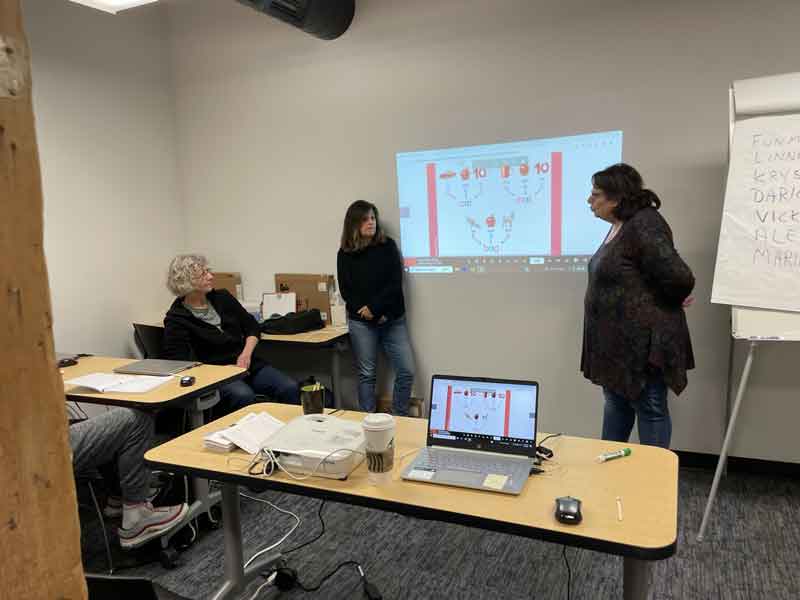
When invited to join the Global Advisory Committee for Dr. Gandhi’s organization, DEVI Sansthan, I eagerly accepted and traveled to Lucknow, India, in March 2023 to participate in the first Global Summit. The summit included free training in the ALfA program and a gathering of policymakers from various countries to discuss literacy issues worldwide. Over the course of two days, 26,000 individuals and 200 policymakers convened virtually to engage in these crucial discussions.
During my visit, I had the incredible opportunity to visit several schools in Lucknow and witness the impact of ALfA on children who had learned to read through the program. It was a truly remarkable experience to see young children confidently reading from newspapers. I observed teachers implementing the ALfA methods and listened to their inspiring stories.
Filled with conviction that ALfA is an effective approach, we decided to initiate a pilot program at Literacy Chicago with a group of adult learners who have struggled with reading. Since 1968, Literacy Chicago has been dedicated to teaching adults how to read. While I couldn’t find more recent statistics for Chicago, data from 2014 indicates that 882,000 adults in the city possess low basic literacy skills. Unfortunately, the COVID-19 pandemic has likely exacerbated this issue.
In April 2023, we carefully selected a group of learners willing to participate in the ALfA pilot program for three months. They committed to attending classes regularly, three times a week, with each session lasting two hours. The first hour focused on literacy instruction, while the second hour addressed numeracy skills.
Both the pilot group and a control group, attending our regular reading classes, underwent pre-testing using the Slosson Oral Reading Test (SORT) and the ALfA Numeracy Assessment.
As of the time of writing, we are six weeks into the pilot program, and I would like to share some preliminary observations:
- Initially, both learners and teachers faced challenges in “unlearning” the traditional alphabet and transitioning to focusing on the sounds. This adjustment period lasted a few days.
- It took some time for learners to fully embrace the ALfA method. Changing partners and sitting in different seats presented difficulties for our learners as it took them out of their comfort zones. Initially, some found it childish.
- Learners were unaccustomed to working in pairs or providing feedback to each other, so there was a learning curve in this aspect.
- One learner with dyslexia encountered more difficulties compared to the others. Absenteeism has been influenced by factors such as illness, childcare responsibilities, and other challenges that adult learners face in their daily lives.
- Teachers often felt the urge to provide assistance in the traditional manner, and it has been a learning process for them as well. In the ALfA process, learners are expected to learn primarily on their own.
Nevertheless, despite these initial challenges, learners are now genuinely enjoying the ALfA method. One woman, who previously couldn’t read a single word in English, proudly shared with me, “I can read! When I’m driving, I can read street signs, and I’m no longer afraid of getting lost.” She expressed how reading has brought about a life-changing transformation for her.
Another student, who has attention difficulties and disabilities, can now confidently read a list of words without hesitation. It fills my heart with joy to walk into the classroom and hear the buzz of voices as our learners read aloud, engage in math activities, and experience a newfound sense of confidence and accomplishment. I am confident that the post-testing will reveal significant improvements in both literacy and numeracy scores
I would like to express my eternal gratitude to Milita Halder, whose initial outreach connected me to this transformative opportunity. We are all aware that by empowering more individuals with the gift of literacy, we can make a profound difference in their lives and positively impact those around them.
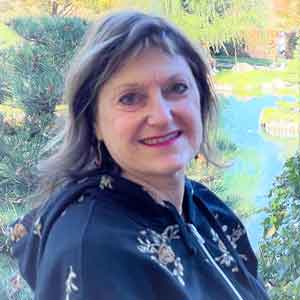
Joanne Telser-Frere
Frere has been working as the Director of Program Development at Literacy Chicago since 2016.
Citations:
- Barbara Bush Foundation for Family Literacy
- Prosperity for America, 84+ Literacy Statistics in the US for 2023
- Dignity Education, Global Advisory Committee
Building on our success, Literacy Chicago is forging a partnership with DEVI Sansthan to facilitate the nationwide implementation of ALfA in the United States, pending the expected positive outcomes of our pilot program. We are committed to addressing the pressing literacy crisis in our country and ensuring that every individual, regardless of their background or circumstances, has the opportunity to acquire essential literacy skills.
The journey towards universal literacy is not an easy one, but with innovative methods like ALfA and the collective efforts of passionate individuals and organizations, we can turn the tide and empower countless lives through the transformative power of literacy. Together, let us continue to strive for a future where literacy is a fundamental right for all, opening doors of opportunity and unlocking the full potential of individuals and communities.