Fast-Tracking Mother-tongue Literacy in the Age of AI & Climate Change
Accelerating foundational literacy in the age of AI and climate change is vital for empowering individuals and communities to address urgent challenges - By Dr. Sunita Gandhi
In the age of AI and climate change, the need for fast-tracking foundational literacy becomes even more crucial. Climate change poses unprecedented challenges that require informed and engaged individuals to drive sustainable solutions. Foundational literacy equips people with the knowledge and critical thinking skills necessary to understand the consequences of climate change, protect their families and communities from the consequences of climate change, and actively participate in climate action initiatives.
Foundational Literacy and Numeracy (FLN) stands at the core of the Sustainable Development Goals (SDGs). It is an essential skill that empowers individuals to actively participate in various domains of life, such as education, employment, health, gender equality, and poverty reduction.
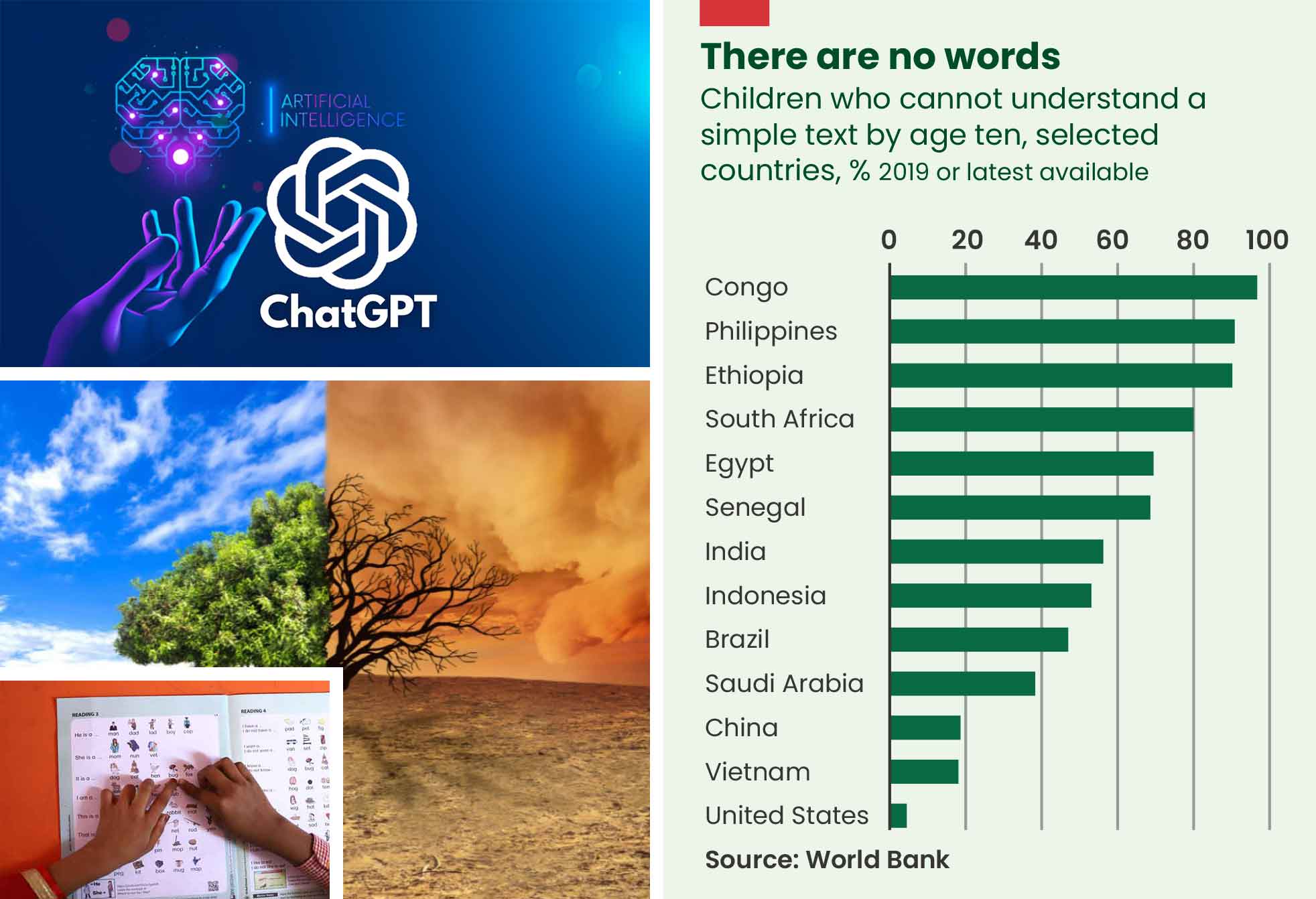
The COVID-19 pandemic has further exacerbated the already huge literacy challenge. Disturbingly, in many countries like the Democratic Republic of Congo and the Philippines, 90% of 10-year-olds cannot read a simple text with comprehension. Only 30% of 10-year-olds can read (UNICEF). The recovery from this setback is a critical priority, then going beyond pre-Covid levels of literacy to attaining universal literacy as fast as possible.
Failure to bridge the gap between the illiterate and the literate will widen the divide even further, creating a stark contrast between those who can leverage AI and those left behind. Moreover, the historical significance of literacy is underscored by its impressive return on investment (ROI), estimated at seven times the initial investment. The costs of slow progress of literacy are colossal, and unimaginable.
The urgency for global literacy has never been greater, reminiscent of the time when people had to adapt to the newly industrializing world during the Industrial Revolution. To address this challenge, policymakers, educators, and stakeholders must prioritize foundational literacy to unlock its transformative potential.
By equipping individuals with the ability to read, write, and comprehend, foundational literacy lays the groundwork for their active engagement in addressing the global challenges outlined in the SDGs.
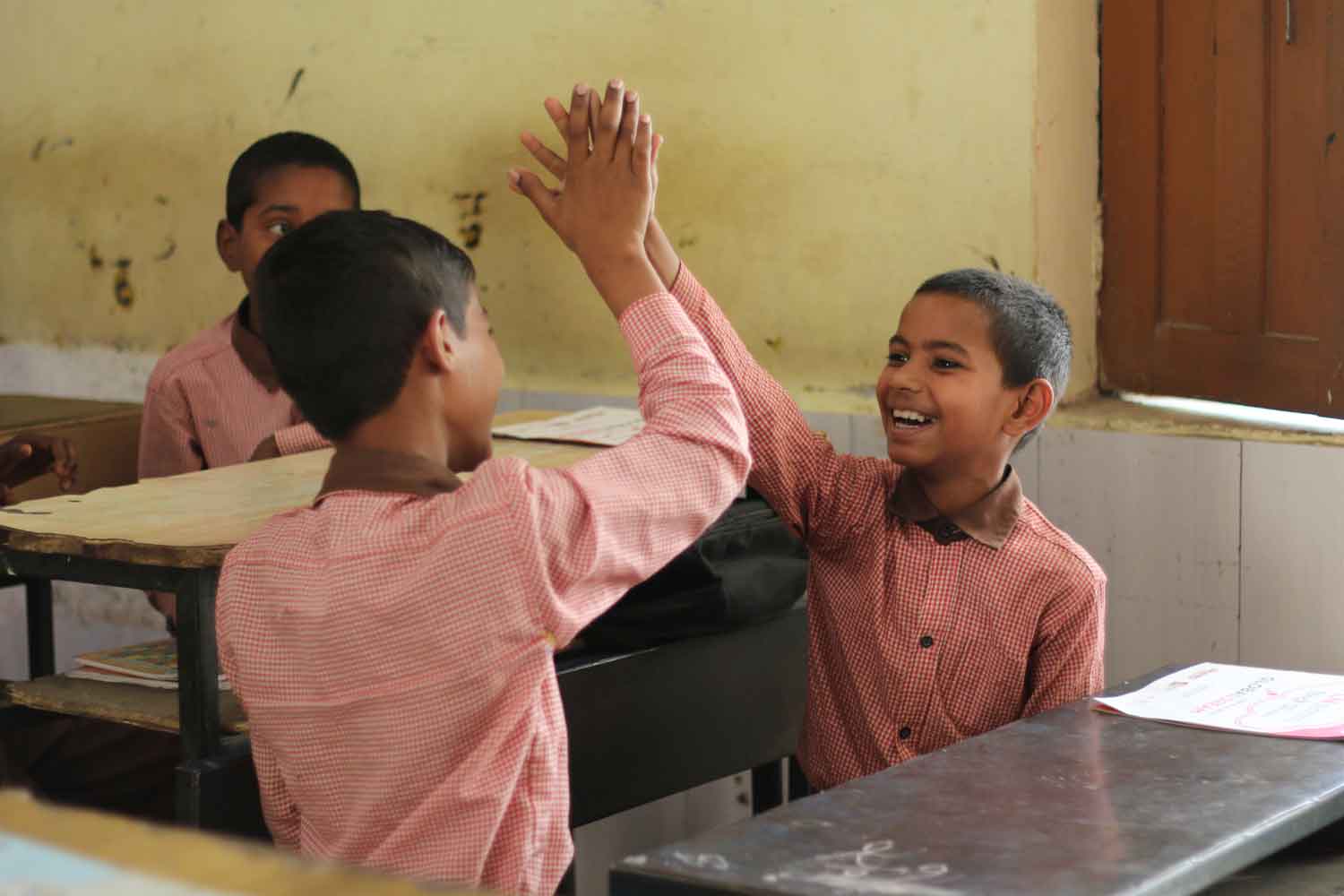
One system that exemplifies the efficacy of evidence-based approaches is ALfA (Accelerating Learning for All). The pedagogy encourages learners to discover facts independently, using their visual understanding of the environment and cognitive connections to scaffold learning from simple to complex. ALfA emphasizes learning in pairs and organizes learning experiences from known to unknown, collaborate, exchange knowledge, and co-create their learning. By doing so, it fast-tracks learning. It further fosters inclusive societies, empowers individuals, and helps build a future focused on the collective good.
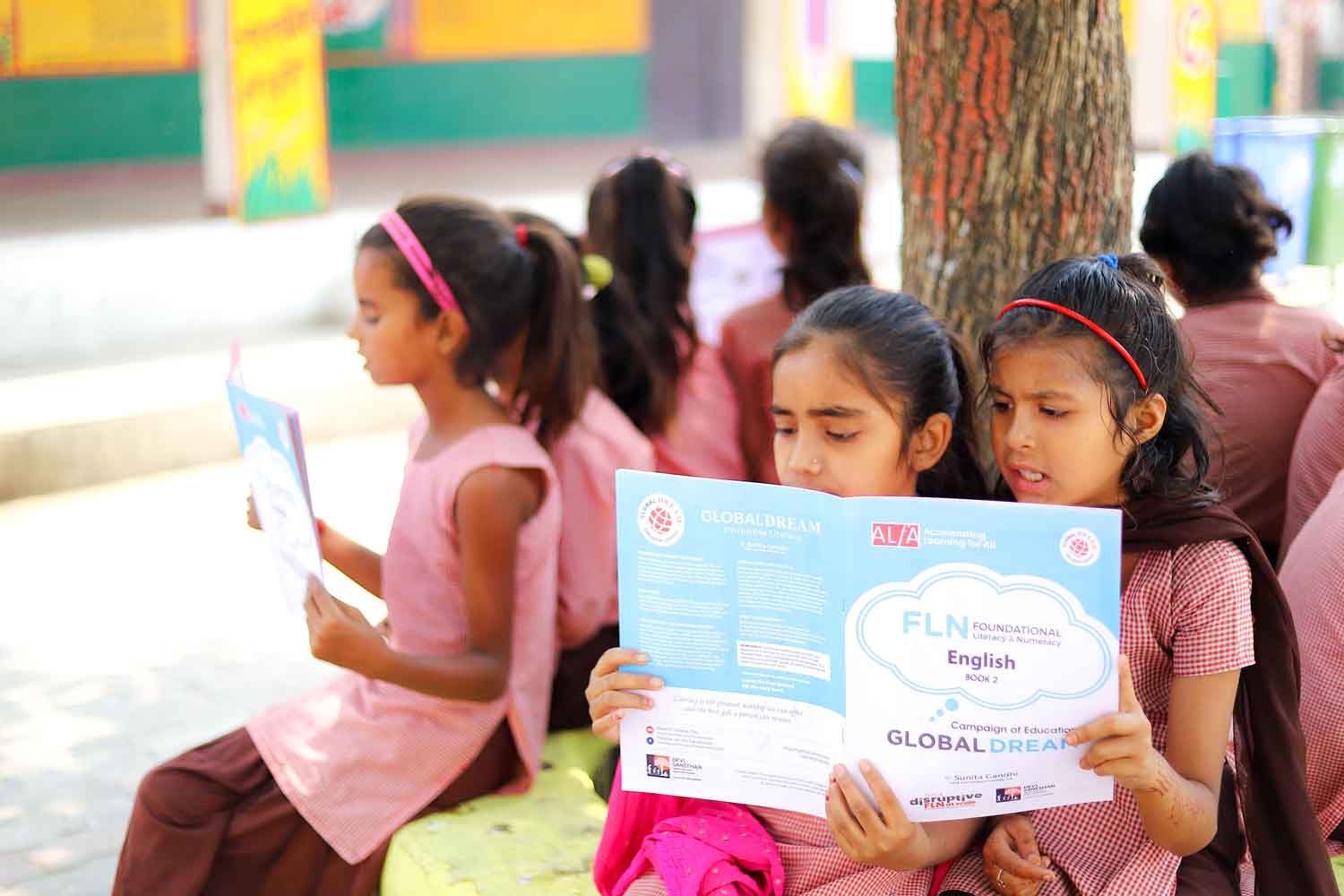
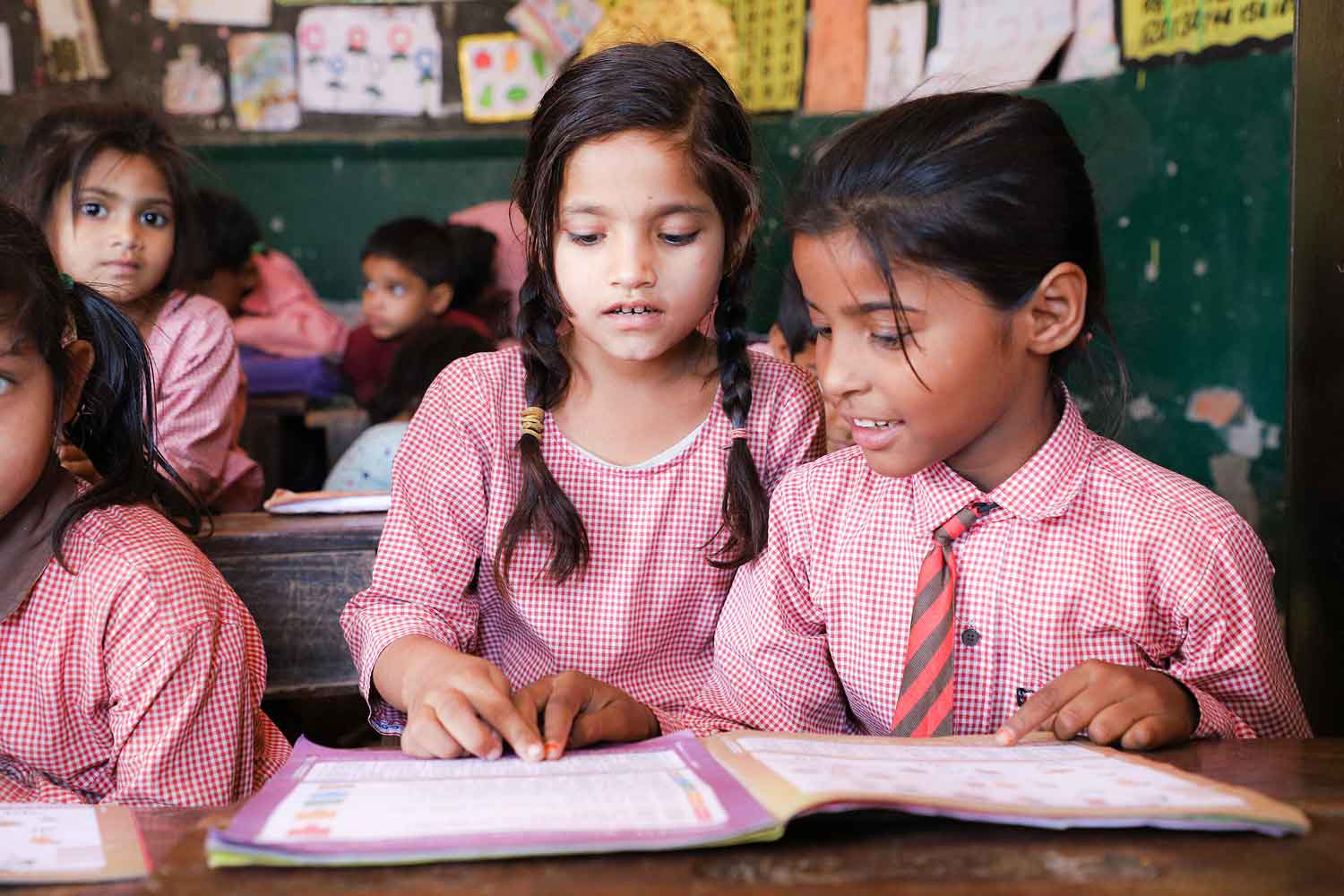
The disruptive pedagogy of ALfA revolutionizes the process of learning by employing innovative techniques and materials. The study materials used in ALfA consist of simple prompts with visuals that encourage action between two children working as a pair. Instead of relying on extensive textbooks and workbooks, ALfA utilizes thin booklets comprising only 15 to 20 pages per child, significantly reducing the volume of materials. This streamlined approach enables children to learn both reading and writing skills, starting from zero knowledge of letters and progressing to Grade 3 proficiency in just 30-45 days. Similarly, a few additional pages per child are sufficient to achieve Grade 3 proficiency in numeracy.
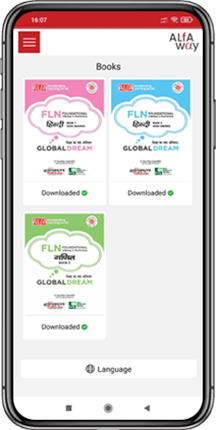
MOTHER TONGUE LITERACY: 30-45 days is all it takes using ALfA Way App beginning to be adopted worldwide in different nations.

ALfa in 30+ Languages
The disruptive pedagogy of ALfA revolutionizes the process of learning by employing innovative techniques and materials. The study materials used in ALfA consist of simple prompts with visuals that encourage action between two children working as a pair. Instead of relying on extensive textbooks and workbooks, ALfA utilizes thin booklets comprising only 15 to 20 pages per child, significantly reducing the volume of materials. This streamlined approach enables children to learn both reading and writing skills, starting from zero knowledge of letters and progressing to Grade 3 proficiency in just 30-45 days. Similarly, a few additional pages per child are sufficient to achieve Grade 3 proficiency in numeracy.
Low-to-no cost Mother Tongue Fast-Track Literacy is presently available in 30 languages (15 Indian and 15 international).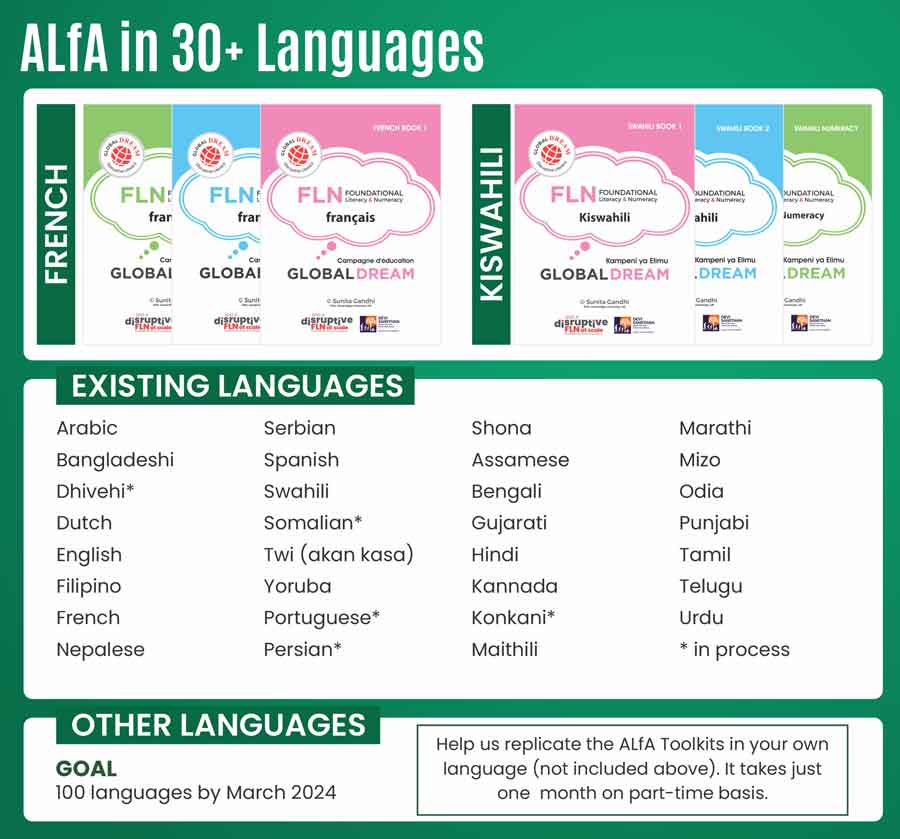
MOTHER TONGUE LITERACY
30-45 days is all it takes using ALfA 40-page booklet for Literacy (Reading & Writing) and 20-page booklet to take a child from ground zero to Grade 3 level in foundational skills of literacy and numeracy using a vastly disruptive pedagogy of ALfA. Further, the booklets are shared by two children working in a pair for one period per subject for just 30 to 45 school days to master the FLN skills and go beyond the class / grade requirements. The materials used for learning develop environmental consciousness. Once the children have learned the skill to read, they read stories and roleplays on climate action and citizenship.
ALfA’s reach is extensive, as it is available in 30 languages, with more being added continuously. Alongside its primary focus on literacy, ALfA integrates climate consciousness into its learning design. Once learners acquire the skill to read, which typically takes just four weeks with ALfA, they engage with storybooks on climate change and participate in role-plays centered around citizenship, connectedness (social-emotional-mental well-being), and character development. This holistic approach ensures that learners become well-rounded individuals who are equipped to tackle the challenges of the current era in a more effective and informed manner. ALfA’s pedagogy not only facilitates skill acquisition but also nurtures a sense of responsibility and empowerment in learners, preparing them to make climate-conscious choices and contribute positively to their communities.
Training of teachers and trainers through Massive Open Online Training has been a breakthrough leveraging the power of technology to reach to far corners of the world. The first MOOT in March 2023 attracted participation from 53 countries and 26 states and union territories of India.ALfA literacy education extends beyond reading and writing skills. It encompasses climate action, citizenship, character development, and connectedness (social-emotional-mental well-being). By integrating these elements into literacy programs, we can empower learners to actively engage with global challenges, develop a sense of responsibility towards their communities, foster positive
values and ethical behavior, and cultivate meaningful connections with others. By emphasizing learning in pairs, ALfA cultivates a sense of agency and ownership of one’s learning creating a collaborative learning environment that promotes knowledge sharing, community engagement, and collective problem-solving.
ALfA (Accelerating Learning for All) is a groundbreaking educational system that not only addresses foundational literacy but also integrates climate change education seamlessly. ALfA recognizes the interconnectedness between literacy, climate change, and sustainable development. By going beyond foundational skills and addressing multiple competencies, we can narrow the gap between the illiterate and the literate in this age of AI.
As the world becomes increasingly reliant on AI, the speed at which we achieve global literacy has become of utmost importance. Fast-tracking foundational literacy in the age of AI and climate change is a crucial step towards empowering individuals and communities to address the pressing challenges of our time. Through innovative approaches like ALfA, which seamlessly integrates climate change education into the curriculum, learners not only acquire essential literacy skills but also develop environmental stewardship. By equipping future generations with this knowledge and empowering them to take action, we can build a more resilient, climate-conscious, and sustainable future for all.
In conclusion, the speed at which we achieve global literacy has become of utmost importance in this age of AI. A paradigm shift in education is necessary, one that ensures equitable access to quality education for all. Only then can we bridge the gap, empower learners, and create a more inclusive society that is not left behind.