
Richard Nilsson's Interview
Richard Nilsson's Call to Action: Education, Environment and Equal Rights
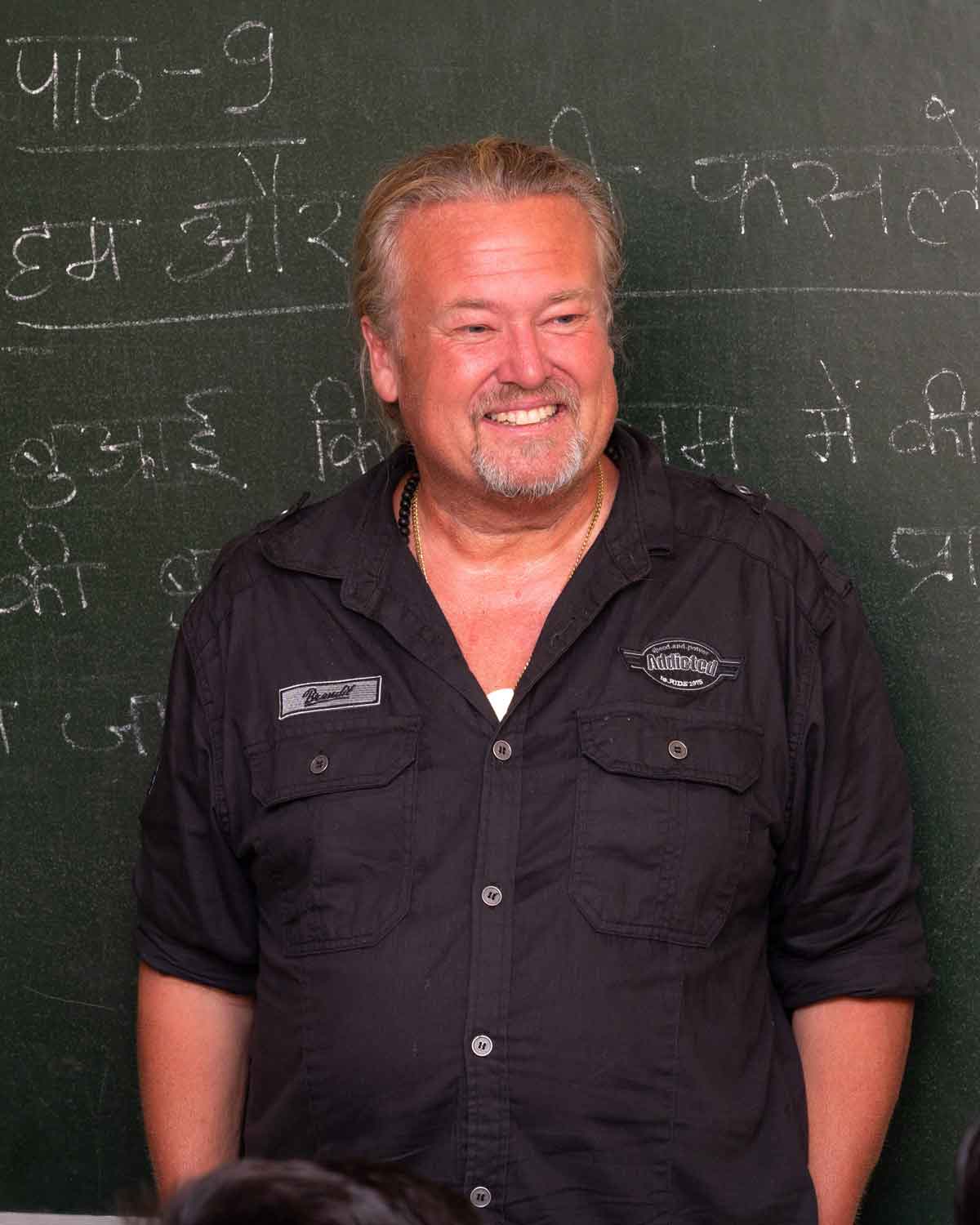 Richard Nilsson,
President of Adventure
of Humanity, France,
recently visited Lucknow,
the capital of Uttar
Pradesh, India’s most populous
state, to witness a groundbreaking
pedagogy in Foundational Learning
& Numeracy known as ALfA:
Accelerating Learning for All. This
pioneering approach is led by Dr.
Sunita Gandhi, the CEO of DEVI
Sansthan. Adventure of Humanity,
which was founded in 1999 by
Michael Jackson on behalf of the
Nelson Mandela Children Fund,
UNESCO, and the Red Cross, signed
a Memorandum of Understanding
(MoU) with DEVI during Nilsson’s
visit. This partnership is dedicated
to expediting universal literacy and contributing to the achievement
of Sustainable Development Goal
(SDG) 4 and 13 objectives. Yusra
Fatima from 10X Good caught up
with Nilson to delve deeper into his
organization’s mission and explore
various facets of education and
development.
Richard Nilsson,
President of Adventure
of Humanity, France,
recently visited Lucknow,
the capital of Uttar
Pradesh, India’s most populous
state, to witness a groundbreaking
pedagogy in Foundational Learning
& Numeracy known as ALfA:
Accelerating Learning for All. This
pioneering approach is led by Dr.
Sunita Gandhi, the CEO of DEVI
Sansthan. Adventure of Humanity,
which was founded in 1999 by
Michael Jackson on behalf of the
Nelson Mandela Children Fund,
UNESCO, and the Red Cross, signed
a Memorandum of Understanding
(MoU) with DEVI during Nilsson’s
visit. This partnership is dedicated
to expediting universal literacy and contributing to the achievement
of Sustainable Development Goal
(SDG) 4 and 13 objectives. Yusra
Fatima from 10X Good caught up
with Nilson to delve deeper into his
organization’s mission and explore
various facets of education and
development.
Yusra Fatima: Incorporating Nelson Mandela’s wisdom, how do you see the role of education as a powerful weapon in the fight against climate change?
Richard Nilsson: Incorporating Mandela’s wisdom, we can see education as a powerful weapon in the fight against climate change. Nelson Mandela’s legacy reminds us of the importance of justice, Education is a cornerstone of our efforts to achieve equal rights for all, regardless of gender, age, race, or religious beliefs. It empowers children with equal access to knowledge and opportunities, driving us closer to a world where everyone is treated fairly and justly. In our journey to create lasting change for the environment and society, dedication to education is essential. Nelson Mandela’s example of resilience during his long imprisonment, along with Michael Jackson’s support for Mandela’s Children Fund, demonstrates the power of education in inspiring hope and fostering positive change.
Both Mandela and Jackson understood the significance of education as a force for good. In 1999, Michael Jackson held two concerts, one in Munich and another in Seoul, Korea, to support Nelson Mandela’s Children Fund, UNESCO, and the Red Cross, further highlighting their commitment to these principles. Education remains a key instrument in shaping a brighter future, where humanity collectively addresses climate change and upholds the values of equality, justice, and compassion for all.
Yusra Fatima: In your view, how can global efforts to mobilize for education and the environment uplift not only communities and nations but also elevate the spirit of humanity?
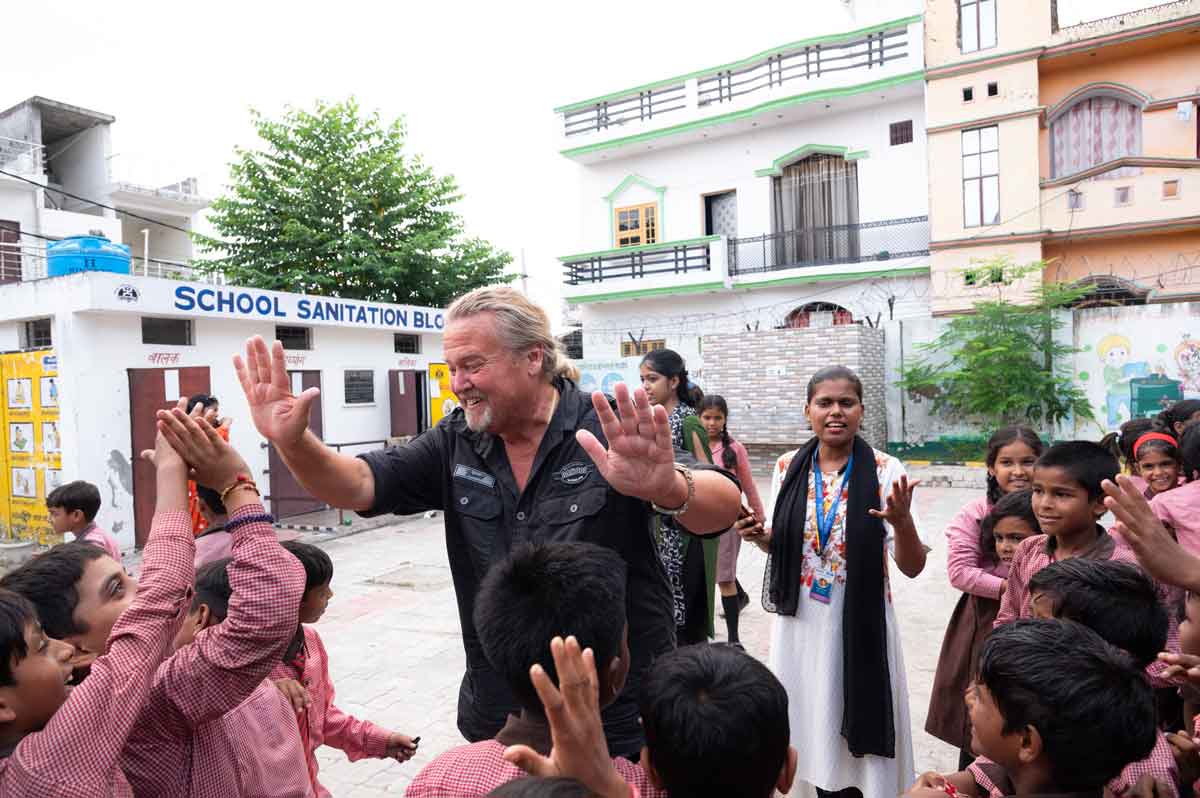
Richard Nilsson: One of the primary focuses of our work revolves around the intersection of education and the environment, with a global perspective in mind. It’s crucial to recognize that our dedication to these issues on a global scale has profound implications. When we discuss environmental concerns, we view pollution as a form of violence against the environment. This violence affects not just nature but also the very essence of humanity.
Consider the alarming fact that millions of people worldwide suffer and even lose their lives each year due to the inability to breathe clean air. If we fail to educate our children about the interconnectedness of all living beings and nature, we risk facing a bleak future. The air we breathe is the same air the trees breathe, creating a shared destiny. When we harm the environment, we are essentially harming ourselves.
Think about how, just two centuries ago, we could drink water directly from rivers. Today, our water resources are limited, and clean freshwater is increasingly scarce. Similarly, when we consume contaminated food, it enters our bodies, posing a threat to our well-being. This emphasizes the critical importance of ecological food, access to clean water, and breathable air, which are all facets of equal rights. These issues are not limited to specific regions like India or Brazil; they concern all living things on our planet.
To address these challenges, we aim to mobilize resources. We need an additional 50,000 supporters to join our cause. By establishing a crowdfunding platform and engaging with your students, we can harness the power of social media and activate your students to raise awareness about our mission. We also plan to involve sports celebrities to add a “star factor” to our campaign. With these strategies in place, we are confident that we can rapidly secure the necessary funds. Moreover, we are open to collaboration with Rotary clubs worldwide to further amplify our efforts, recognizing that different countries have unique strengths and networks that we can leverage to achieve our goals. Together, we can create a positive impact on education and the environment, ensuring a better future for all.
Yusra Fatima: Can you elaborate on the “Triangle for Literacy, Livelihood, and Climate” approach, and how do you believe it can effectively address climate change while promoting education and equal rights on a global scale?
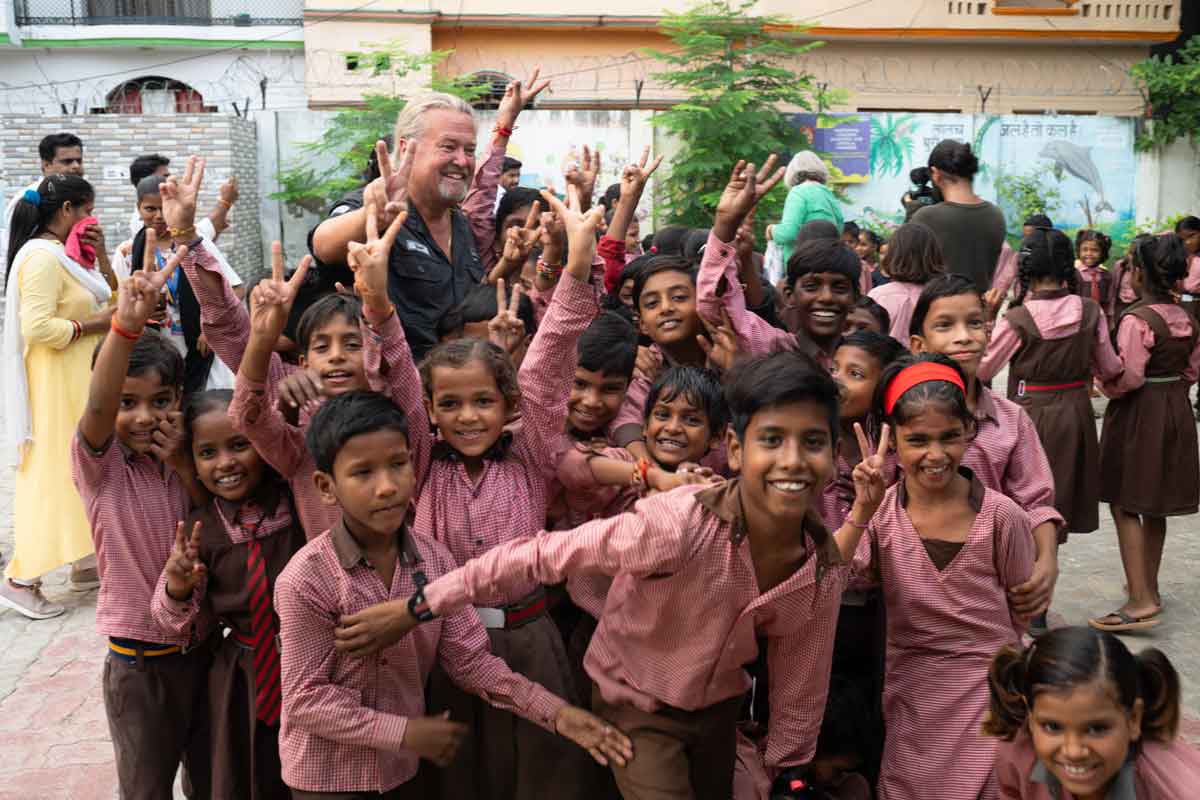
Richard Nilsson: Certainly, the “Triangle for Literacy, Livelihood, and Climate” approach is a comprehensive strategy to combat climate change while fostering education and equal rights worldwide. It involves a multi-pronged approach to address these critical issues.
Firstly, we recognize that education is a powerful tool in the fight against climate change. By educating our children about the importance of environmental stewardship and sustainability, we empower the next generation to become responsible custodians of the Earth. This aspect of our approach focuses on literature and education as essential building blocks for raising awareness and promoting positive action.
Secondly, we believe in engaging with another crucial component of our society: farmers. Agriculture plays a significant role in climate change due to practices such as excessive water use and the widespread use of pesticides, which can harm both the environment and human health. Through education and training, we aim to empower farmers to adopt sustainable agricultural practices, including organic farming and efficient water usage. This not only mitigates the negative impact of agriculture on the environment but also improves the livelihoods of those working in this sector.
The third component of our approach involves cross-border collaboration and knowledge sharing. We envision a world where students can visit farms and witness firsthand the impact of sustainable farming practices. This experiential learning can inspire them to appreciate the interconnectedness of all living beings and nature. It is through such experiences that we hope to instill a sense of responsibility and dedication to addressing climate change.
In essence, the “Triangle for Literacy, Livelihood, and Climate” approach integrates education, sustainable farming, and cross-border collaboration to create a holistic solution to climate change. It recognizes that education is the foundation for raising awareness, while empowering farmers and students alike to make a positive impact on the environment. Ultimately, our goal is to promote equal rights, as clean air, water, and food are fundamental rights for all living beings, transcending geographical boundaries and benefiting the entire planet.